The Birth of "Einfühlung" from the Spirit of Materialism: Necromantic Empathy in Nineteenth-Century German Aesthetics

Date and Time
Location
GERMAN STUDIES: NEW PERSPECTIVES
SPEAKER: Joseph Metz, University of Utah
The concept of “empathy” and German aesthetic theory share a complexly interwoven, if sometimes forgotten, history: the word Einfühlung, translated as the English neologism “empathy” in 1909, was coined by the German art theorist Robert Vischer in his 1873 dissertation On the Optical Sense of Form. Einfühlung—literally “feeling oneself into”—originally meant not intersubjective human fellow-feeling but the projection of human “life” into inanimate objects; it would soon form the core of the new discipline of psychological aesthetics (the experimental study of human sensory responses) and become arguably the dominant aesthetic theory of fin-de-siècle Germany.
In this talk, I unpack the figural network of Vischer’s inaugural treatise on Einfühlung and explore its emergence from the intersections of idealist thought and German neurophysiology. As I argue, Einfühlung cannot be thought apart from the nineteenth-century struggle between declining vitalism and the rise of materialist science, with its accompanying “death of nature,” as Carolyn Merchant called it. A close examination of Vischer’s text reveals not only a marked struggle to work through changing relationships to the object-world and to German theory’s post-Romantic legacy but also a conspicuous inventory of uncanny desires and anxieties surrounding the reanimation of the dead (including dead “form”), necromancy, and “demonic” possession—desires and anxieties that will come to haunt the understanding of interpersonal empathy as well. That is, we find below the rhetorical surface of Einfühlungstheorie or the theory of aesthetic empathy something like a “materialist unconscious”: what an age of scientific materialism simultaneously longs for and fears.
About the Speaker
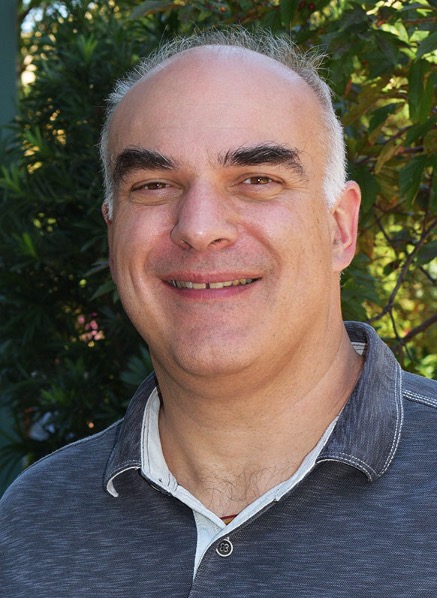
Joseph Metz is Associate Professor of German and of Comparative Literary and Cultural Studies (CLCS) at the University of Utah, where he teaches graduate and undergraduate courses on aesthetics, literary and cultural theory, nineteenth- and twentieth-century German literature, and applied humanities. His articles on Adalbert Stifter, Kafka, Rilke, and David Mitchell have appeared in PMLA, the Deutsche Vierteljahrsschrift für Literaturwissenschaft und Geistesgeschichte, the Germanic Review, and Critique: Studies in Contemporary Fiction, among others. He is the author most recently of The Feeling of the Form: Empathy and Aesthetics from Büchner to Rilke (Cornell UP, 2025), a cultural “para-history” of the uncanny exchanges between aesthetic empathy (Einfühlung) and interpersonal empathy as well as their relation to such present-day concerns as affect theory, “other minds,” artificial intelligence, and object-oriented ontology.